skip to main |
skip to sidebar
Way back when, your author used to fancy himself a movie critic. And on occasion, some people he hasn't talked to in a while will immediately ask if he still reviews movies. Since he usually has to begrudgingly admit that he is still waiting tables instead, there will occasionally be movie reviews posted here at BMC—not necessarily new or even the most recent releases, but still technically reviews—just so he can say he indeed still bitches about what's getting too much/not enough attention. Reviews will offer a quick take that ends with a brief summarizing thought that, in the spirit of Metacritic or Sound Opinions, will be in green (denoting a positive opinion), yellow orange (mixed opinion) or red (negative opinion). And sorry, but no star-ratings or letter grades.
Today's review: "127 Hours," originally released September 4, 2010 at the Telluride Film Festival.
 Way back when, your author used to fancy himself a movie critic. And on occasion, some people he hasn't talked to in a while will immediately ask if he still reviews movies. Since he usually has to begrudgingly admit that he is still waiting tables instead, there will occasionally be movie reviews posted here at BMC—not necessarily new or even the most recent releases, but still technically reviews—just so he can say he indeed still bitches about what's getting too much/not enough attention. Reviews will offer a quick take that ends with a brief summarizing thought that, in the spirit of Metacritic or Sound Opinions, will be in green (denoting a positive opinion), yellow (mixed opinion) or red (negative opinion). And sorry, but no star-ratings or letter grades.
Today's review: "Winter's Bone," originally released January 21, 2010 at the Sundance Film Festival.
Way back when, your author used to fancy himself a movie critic. And on occasion, some people he hasn't talked to in a while will immediately ask if he still reviews movies. Since he usually has to begrudgingly admit that he is still waiting tables instead, there will occasionally be movie reviews posted here at BMC—not necessarily new or even the most recent releases, but still technically reviews—just so he can say he indeed still bitches about what's getting too much/not enough attention. Reviews will offer a quick take that ends with a brief summarizing thought that, in the spirit of Metacritic or Sound Opinions, will be in green (denoting a positive opinion), yellow (mixed opinion) or red (negative opinion). And sorry, but no star-ratings or letter grades.
Today's review: "Winter's Bone," originally released January 21, 2010 at the Sundance Film Festival.
Way back when, your author used to fancy himself a movie critic. And on occasion, some people he hasn't talked to in a while will immediately ask if he still reviews movies. Since he usually has to begrudgingly admit that he is still waiting tables instead, there will occasionally be movie reviews posted here at BMC—not necessarily new or even the most recent releases, but still technically reviews—just so he can say he indeed still bitches about what's getting too much/not enough attention. Reviews will offer a quick take that ends with a brief summarizing thought that, in the spirit of Metacritic or Sound Opinions, will be in green (denoting a positive opinion), yellow (mixed opinion) or red (negative opinion). And sorry, but no star-ratings or letter grades.
Today's review: "Toy Story 3," originally released June 12, 2010 at the Taormina Film Festival.
 Way back when, your author used to fancy himself a movie critic. And on occasion, some people he hasn't talked to in a while will immediately ask if he still reviews movies. Since he usually has to begrudgingly admit that he is still waiting tables instead, there will occasionally be movie reviews posted here at BMC—not necessarily new or even the most recent releases, but still technically reviews—just so he can say he indeed still bitches about what's getting too much/not enough attention. Reviews will offer a quick take that ends with a brief summarizing thought that, in the spirit of Metacritic or Sound Opinions, will be in green (denoting a positive opinion), yellow (mixed opinion) or red (negative opinion). And sorry, but no star-ratings or letter grades.
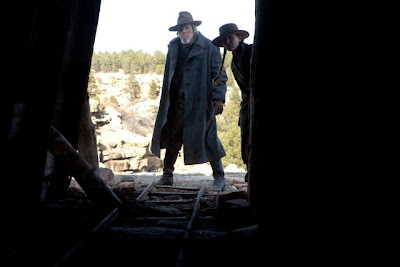
Today's review: "True Grit," originally released December 14, 2010 in New York City.
Way back when, your author used to fancy himself a movie critic. And on occasion, some people he hasn't talked to in a while will immediately ask if he still reviews movies. Since he usually has to begrudgingly admit that he is still waiting tables instead, there will occasionally be movie reviews posted here at BMC—not necessarily new or even the most recent releases, but still technically reviews—just so he can say he indeed still bitches about what's getting too much/not enough attention. Reviews will offer a quick take that ends with a brief summarizing thought that, in the spirit of Metacritic or Sound Opinions, will be in green (denoting a positive opinion), yellow (mixed opinion) or red (negative opinion). And sorry, but no star-ratings or letter grades.
Today's review: "True Grit," originally released December 14, 2010 in New York City.
Way back when, your author used to fancy himself a movie critic. And on occasion, some people he hasn't talked to in a while will immediately ask if he still reviews movies. Since he usually has to begrudgingly admit that he is still waiting tables instead, there will occasionally be movie reviews posted here at BMC—not necessarily new or even the most recent releases, but still technically reviews—just so he can say he indeed still bitches about what's getting too much/not enough attention. Reviews will offer a quick take that ends with a brief summarizing thought that, in the spirit of Metacritic or Sound Opinions, will be in green (denoting a positive opinion), yellow (mixed opinion) or red (negative opinion). And sorry, but no star-ratings or letter grades.
Today's review: "Inception," originally released July 8, 2010 in London.
Way back when, your author used to fancy himself a movie critic. And on occasion, some people he hasn't talked to in a while will immediately ask if he still reviews movies. Since he usually has to begrudgingly admit that he is still waiting tables instead, there will occasionally be movie reviews posted here at BMC—not necessarily new or even the most recent releases, but still technically reviews—just so he can say he indeed still bitches about what's getting too much/not enough attention. Reviews will offer a quick take that ends with a brief summarizing thought that, in the spirit of Metacritic or Sound Opinions, will be in green (denoting a positive opinion), yellow (mixed opinion) or red (negative opinion). And sorry, but no star-ratings or letter grades.
Today's review: "The Kids Are All Right," originally released January 25, 2010 at the Sundance Film Festival.
 Way back when, your author used to fancy himself a movie critic. And on occasion, some people he hasn't talked to in a while will immediately ask if he still reviews movies. Since he usually has to begrudgingly admit that he is still waiting tables instead, there will occasionally be movie reviews posted here at BMC—not necessarily new or even the most recent releases, but still technically reviews—just so he can say he indeed still bitches about what's getting too much/not enough attention. Reviews will offer a quick take that ends with a brief summarizing thought that, in the spirit of Metacritic or Sound Opinions, will be in green (denoting a positive opinion), yellow (mixed opinion) or red (negative opinion). And sorry, but no star-ratings or letter grades.
Today's review: "The Social Network," originally released September 24, 2010 at the New York Film Festival.
Way back when, your author used to fancy himself a movie critic. And on occasion, some people he hasn't talked to in a while will immediately ask if he still reviews movies. Since he usually has to begrudgingly admit that he is still waiting tables instead, there will occasionally be movie reviews posted here at BMC—not necessarily new or even the most recent releases, but still technically reviews—just so he can say he indeed still bitches about what's getting too much/not enough attention. Reviews will offer a quick take that ends with a brief summarizing thought that, in the spirit of Metacritic or Sound Opinions, will be in green (denoting a positive opinion), yellow (mixed opinion) or red (negative opinion). And sorry, but no star-ratings or letter grades.
Today's review: "The Social Network," originally released September 24, 2010 at the New York Film Festival.
Way back when, your author used to fancy himself a movie critic. And on occasion, some people he hasn't talked to in a while will immediately ask if he still reviews movies. Since he usually has to begrudgingly admit that he is still waiting tables instead, there will occasionally be movie reviews posted here at BMC—not necessarily new or even the most recent releases, but still technically reviews—just so he can say he indeed still bitches about what's getting too much/not enough attention. Reviews will offer a quick take that ends with a brief summarizing thought that, in the spirit of Metacritic or Sound Opinions, will be in green (denoting a positive opinion), yellow (mixed opinion) or red (negative opinion). And sorry, but no star-ratings or letter grades.
Today's review: "The King's Speech," originally released September 6, 2010 at the Telluride Film Festival.
 Way back when, your author used to fancy himself a movie critic. And on occasion, some people he hasn't talked to in a while will immediately ask if he still reviews movies. Since he usually has to begrudgingly admit that he is still waiting tables instead, there will occasionally be movie reviews posted here at BMC—not necessarily new or even the most recent releases, but still technically reviews—just so he can say he indeed still bitches about what's getting too much/not enough attention. Reviews will offer a quick take that ends with a brief summarizing thought that, in the spirit of Metacritic or Sound Opinions, will be in green (denoting a positive opinion), yellow (mixed opinion) or red (negative opinion). And sorry, but no star-ratings or letter grades.
Today's review: "The Fighter," originally released December 10, 2010.
Way back when, your author used to fancy himself a movie critic. And on occasion, some people he hasn't talked to in a while will immediately ask if he still reviews movies. Since he usually has to begrudgingly admit that he is still waiting tables instead, there will occasionally be movie reviews posted here at BMC—not necessarily new or even the most recent releases, but still technically reviews—just so he can say he indeed still bitches about what's getting too much/not enough attention. Reviews will offer a quick take that ends with a brief summarizing thought that, in the spirit of Metacritic or Sound Opinions, will be in green (denoting a positive opinion), yellow (mixed opinion) or red (negative opinion). And sorry, but no star-ratings or letter grades.
Today's review: "The Fighter," originally released December 10, 2010.
Way back when, your author used to fancy himself a movie critic. And on occasion, some people he hasn't talked to in a while will immediately ask if he still reviews movies. Since he usually has to begrudgingly admit that he is still waiting tables instead, there will occasionally be movie reviews posted here at BMC—not necessarily new or even the most recent releases, but still technically reviews—just so he can say he indeed still bitches about what's getting too much/not enough attention. Reviews will offer a quick take that ends with a brief summarizing thought that, in the spirit of Metacritic or Sound Opinions, will be in green (denoting a positive opinion), yellow (mixed opinion) or red (negative opinion). And sorry, but no star-ratings or letter grades.
Today's review: "Black Swan," originally released September 1, 2010 at the Venice Film Festival.
Way back when, your author used to fancy himself a movie critic. And on occasion, some people he hasn't talked to in a while will immediately ask if he still reviews movies. Since he usually has to begrudgingly admit that he is still waiting tables instead, there will occasionally be movie reviews posted here at BMC—not necessarily new or even the most recent releases, but still technically reviews—just so he can say he indeed still bitches about what's getting too much/not enough attention. Reviews will offer a quick take that ends with a brief summarizing thought that, in the spirit of Metacritic or Sound Opinions, will be in green (denoting a positive opinion), yellow (mixed opinion) or red (negative opinion). And sorry, but no star-ratings or letter grades.
Today's review: "The Messenger," originally released January 19, 2009 at the Sundance Film Festival.
THREE THINGS I LIKED:
 THAT MATT DAMON'S ONE LOVABLY GOOFY BASTARD — After alternating between three performances in the Bourne series (with a fourth installment likely) and three performances in the Ocean's series (with a fourth installment hopefully not being likely), we get to see Damon take advantage of the opportunity to try something decidedly different from those two recurring roles that he inhabited for the last decade. In The Informant!, Damon is reunited with Steven Soderbergh once again, adding a bushy mustache and some extra 30 pounds in taking on the role of Mark Whitacre, the real-life Archer Daniel Midland whistle-blower who learns of his company's involvement in an international price-fixing scheme. He proves to be remarkably good at playing what is essentially a bad actor, and Melanie Lynskey is equally effective as Whitacre's loyal albeit clueless wife.
- AT LEAST IT'S A LITTLE PLAYFUL WITH THE "BASED ON A TRUE STORY" BIT — Keeping in mind how I generally feel about that phrase's use, I took Steven Soderbergh's opening disclaimer that while most of the story is fact-based, the filmmakers also had no problems changing a few things for dramatic effect. The warning concludes with, "So there," and at the start it's hard not to smirk at Soderbergh effectively flicking off his entire audience right from the get-go about how faithful he's going to be that phrase.
- I HAD A FEW LAUGHS ... — The movie includes a hit-or-miss stream-of-consciousness series of random inner thoughts from its main character such as wondering why the German word for pen has so many syllables or how polar bears can tell their nose is black.
THREE THINGS I DIDN'T:
- ... BUT NOT MANY WERE VERY MEMORABLE — Jeez, even those two particular jokes I listed there don't even really sound that funny. Although there's a surprising number of comedic performers in this cast, The Informant! withdraws amused chuckles from its audience, but hardly any laughter of the gut-busting variety.
- THIS IS WHY THE OLD-TIMERS DESPISE VOICE-OVER NARRATION — While the joke here seems to be taking pride in using the inclusion of every one of Whitacre's most mundane and random observations, it barely holds up as a stylistic gimmick and almost deliberately avoids being a genuine storytelling tool.
- IT'S NOT AS ENJOYABLE AS ANY OF THE FILMS IT REMINDED ME OF — You wouldn't be wrong for saying that The Informant! reminds you of The Insider, Confessions of a Dangerous Mind, or even Catch Me If You Can. You also wouldn't be wrong if you felt all three of those aforementioned films were ultimately more entertaining.
25 WORDS OR LESS:
The Informant! feels like an overly long joke on its audience that concludes with an unsatisfying punchline.
THREE THINGS I LIKED:
- THE OPENING MOMENTS — Spike Jonze begins Wild Things with roughly 10-15 minutes of handheld footage of his isolationist young star (Max Records) wreaking havoc. Max gets into a snowball fight that leads to his prized "igloo" being destroyed and then disrupts his divorced mother (Catherine Keener) with demands for dinner while she is trying to spend some quite time with her boyfriend (Mark Ruffalo). I won't make any grand predictions about what the future holds for Records, but as far as this film goes, he mercifully displays none of the typically dreadful child-actor affectations.
- AN ARTIST'S TOUCH — There undoubtedly those who would argue Maurice Sendak's 1963 Caldecott Medal-winner is something too sacred to be adapted for the big screen. Considering that the 338-word book didn't even run 40 pages, it may indeed have been better-suited for a short film. Regardless of any flaws, Jonze's live-action version of Wild Things is ultimately well-intended and far more sincere to its origin than most recent Hollywood attempts at children's classics (example springing to mind: "If the producers had dug up Ted Geisel's body and hung it from a tree, they couldn't have desecrated the man more.").
- THE ACTUAL WILD THINGS LOOK GREAT ... — Most everything in the movie looks great (there's equally ambitious production design and cinematography), but the right combination of giant puppetry and CGI makes the monsters really quite stunning.
THREE THINGS I DIDN'T:
- ... ALTHOUGH THEY COULD'VE BEEN A BIT MORE "WILD" — We're given a variety of voices (James Gandolfini, Lauren Ambrose, Catherine O’Hara, Forest Whitaker, Chris Cooper and Paul Dano) and ultimately a variety of problems—too many problems, actually. Did I call them monsters a second ago? I don't know that they're scary in the traditional sense, but it's accurate if you find dysfunctional families voicing their resentments to be frightening.
- NOBODY LIKES STRETCH MARKS — I understand that those are bound to be somewhat evident when you're basing a script on a work that's just 10 sentences long, but there's multiple points where Wild Things feels as though it's without any real conflict and just sort of meandering. The dialogue between Max and the Wild Things touches on personal relationships and reaches for a larger context, but much of it ends up being forgettable and feeling like filler.
- UM ... SO WHAT REALLY WAS THE POINT OF THAT? — I would've thought that transforming a bedtime story into something like a thesis would result in a perhaps a more profound or significant view of the tale. Instead I was just sort of left thinking, "Well, that was cute."
25 WORDS OR LESS:
The film version will neither usurp nor diminish the legacy of the book.
THREE THINGS I LIKED:

- THE "TRUE" PART OF THE "TRUE STORY" IT'S BASED UPON — The Blind Side gets to use that time-tested five-word phrase by being based upon the Michael Lewis book about the evolution of football strategy over the past three decades (loosely touched on in the film's opening look at the career-ending injury to Joe Theismann) and the remarkable true story of Michael Oher. Indeed, the young man's rise from the streets to the NFL's Baltimore Ravens will probably make for a pretty good movie one day, but for now I guess this film about
Erin Brockovich Leigh Ann Touhy will have to do.
- OF 2009 RELEASES ABOUT LARGE BLACK TEENAGERS OVERCOMING OBSTACLES, THIS GOES DOWN A LOT EASIER THAN PRECIOUS — Polar opposites, really. Whereas Precious seemingly wanted to do nothing but beat you down, there's never a moment that The Blind Side isn't trying to lift you up. It was a different sort of wanting to kill myself, I guess.
- THE ONE SCENE THAT GLORIOUSLY SURPRISED ME — At least Young MC's still getting royalties, I suppose. Up in the Air actually got the guy to perform "Bust a Move," a song I used to like most because of how my buddy nailed it every time at karaoke. But now it manages to induce groans and cringes from me for how often it's utilized for scenes just like the one it pops up in here, a grating shared sing-along session involving Oher (Quinton Aaron) and the profoundly irritating 10-year-old S.J. (Jae Head, exhibiting sheer mastery if the goal was to dissuade me from ever wanting to father children). That said, I won't deny that I bursted out in laughter with that scene's ultimate twist.
THREE THINGS I DIDN'T:
- SANDRA BULLOCK IS PATRONIZING, NOT A PATRON SAINT — If you're not going to bother making Oher much of a character, I suppose you might as well design the script such that every scene for your lead actress gives her the best possible shot at winning an Oscar. The Blind Side makes sure to let Bullock get the better of every single crowd-pleasing scenario necessary, be it with the drug dealers in a dimly lit parking lot or the racist snobby bitches of upper-class lunch settings. She's all charitable, all the time. Too bad the thing she isn't is believable.
- "DON'T ACT, JUST LOOK REALLY BLACK" — Quinton Aaron wasn't given a tremendous amount of dialogue to remember, as director John Lee Hancock seems to prefer just utilizing the actor as a mascot or family pet for the Touhy family at the film's center. As best as I can tell, his only role in this film is just to make every white person that sees him—and then, you know, feels visibly sorry for him for, you know, being black—be that much more self-congratulatory.
- THIS IS ISN'T HELPING MY HAIR LOSS — What dialogue the film does have had me tugging at the ends of what I've got left. I lost count of the number of lines that made me want to scream as though I had just had my sack clipped, but perhaps no exchange better exemplified how riddled with sports clichés than one of the pre-packaged racists saying to the saintly Leigh Ann, "You've changed his life." Even before that big dramatic pause following the "No" that begins Bullock's corrective response and some swelling music, you know exactly what's coming next. There's never a deviation from formula here, and the entire movie's like that.
25 WORDS OR LESS:
Do I sound cheap for thinking the buck I paid to get this from the Redbox felt like a dollar too much?
THREE THINGS I LIKED:

- I DO BELIEVE THE PERFORMANCE FROM MO'NIQUE IS THE BEST FROM ANY 2009 FILM I'VE SEEN SO FAR — Under any other circumstances, I might have found a line like "I should've aborted your dumb ass" as being too cheap to be believable. But as the welfare-cheating mother to 16-year-old Claireece Precious Jones, the physical and verbal abuse excessively doled out over the course of the film ultimately takes a back seat to Mo'Nique's flat-out stunning climactic monologue, a remarkably killer scene that trumped my initial fear that the character would ultimately be too cartoonish in nature. Gabourey Sidibe is also genuinely effecting as Precious, and Lee Daniels gets sincere efforts from the rest of his cast, most notable being surprisingly lower-key turns from both Lenny Kravitz and Mariah Carey than I would have expected.
- THE MOVIE IS SET IN 1987, YET STILL FEELS TIMELY — The film incorporates TV images of Ronald Reagan and Oliver North as a reminder, but when Precious takes part in an alternative education program called Each One Teach One, the film makes us look at both the positive and negative effect of government policies. The actual book was published the same year of Bill Clinton's welfare reform, but in all honesty, I couldn't say that many of the settings for the low-income life lived by those in Precious didn't seem a lot like what I imagine them being today.
- THE FILM IS A LOT LIKE ITS TITLE CHARACTER ... — ... In that it's truly big in spirit and filled with hope. I'm not entirely sure that the message of redemption resonated as much with me as it did for, say, Oprah, but I can at least applaud the sincerity of the effort.
THREE THINGS I DIDN'T:
- THE FILM IS A LOT LIKE ITS TITLE CHARACTER ... — ... In that the viewer could be forgiven for feeling like one of the supporting characters Precious physically overpowers with tremendous ease. The movie's about an overweight teenage girl, but that seems to be a convenient excuse to be overly heavy-handed.
- KEEPING IN MIND WHAT I SAID ABOUT A SERIOUS MAN, THIS IS PILING ON THE WRONG WAY — In a comedy, such extreme amounts of individual hardship can add to the humor. But in Precious, the excess misery for an already disadvantaged black teenager with a bitch of a mother almost makes the adversity comical too. Precious isn't just grotesquely overweight, she's also pregnant with her second child—both of them having been the result of being raped by her father. Oh, and that first child has Down Syndrome. And did I mention the HIV-positive plot twist? Yeah, that would have been a plot spoiler if deep down I hadn't been suspecting that there would be one more obstacle that would inevitably be thrown into the mix.
- STOP TRYING TO BE SO STYLISH — For as much as I admired the quality of the performances Lee Daniels got out of his cast, there were other decisions of his that were regrettable instances of directorial overkill. Whatever themes were being hinted at are inevitably certain to be spelled out for the viewer like, for instance, a rape flashback cutting to a shot of breakfast sizzling in grease on the stove. But perhaps most irritating were the recurring dream sequences Precious has in which she envisions herself glammed up and being photographed on red carpets or in music videos. Whether the intention of these totally needless scenes is to criticize the escapist fantasies of modern America or just to use the fish-out-of-water imagery of an obese black female teen being the subject of paparazzi photographs, Daniels totally misses the mark.
25 WORDS OR LESS:
Positively or negatively, the one thing Precious is certain to do is make you uncomfortable.
THREE THINGS I LIKED:

- YEP, THOSE SPECIAL EFFECTS ARE PRETTY DARN SPECIAL — There is no doubt about James Cameron's mastery of CGI after seeing the world of Pandora. And coming from someone who hasn't been particularly attracted to the gimmick of 3D since the concept was forever destroyed by Super Bowl XXIII, I can comfortably say that it wasn't but a couple scenes into Avatar before I forgot about the glasses I was wearing. Beyond that, I imagine that the film still would look equally impressive in traditional 2D and was relieved that the movie ended up being more of an experience that pulls you in rather than blows you away.
- IT DOESN'T FEEL AS LONG AS THE RUNNING TIME SAYS IT IS — Just like Titanic, it was hard not to be scared off from the nearly three-hour length here. And just like Titanic, Cameron keeps Avatar moving along like a real pro.
- WE CAN START REFERRING TO HIM AS JUST "J.C." NOW, RIGHT? — You can say what you'd like about how the man came off when he proclaimed himself "King of the World" and spoke about how long it would take for technology to catch up to his vision, but the bottom line remains this: James Cameron remains one of the most accomplished directors when it comes to getting butts into seats. His numbers speak for themselves and despite whatever flaws Avatar has, the movie is only going to give people more reason to back Cameron to reach even further out there, technologically speaking, as opposed to ever being forced to pull back.
THREE THINGS I DIDN'T:
- SOUND FAMILIAR? — My immediate thought was similar to the title Stephanie Zacharek used for her review over at Salon, which made sense too since Dances with Wolves won Best Picture, I guess. But other younger friends of mine tossed out Ferngully, Pocahontas, The Last of the Mohicans and just about every other white man-as-hero scenario from past tales where a more primitive species needs assistance.
- SPEAKING OF SOUND, J.C. STILL HAS A LEGENDARY TIN EAR FOR DIALOGUE — For all the 3D wonder of the settings, most of the characters in Avatar are remarkably two-dimensional—at best. We can definitely see the movements of actress Zoë Saldana in her performance as Netyiri, but she's little more than just a vague love interest only interested in being a love interest for the movie's paralegic protagonist, Jake Sully (Sam Worthington). More irritatingly memorable are Giovanni Ribisi's sleazy corporate type (flesh reminder that capitalism-is-bad) and Stephen Lang's crazy military guy (flesh reminder that war-is-bad too) who gets to say things like, "You are not in Kansas anymore, you are on Pandora," and "We will fight terror with terror."
- THIS IS WHY THE RED STATES HATE HOLLYWOOD — The movie's more fascinating when exploring the conflict between the physical limitations of Sully's human Marine and the sudden freedom of his training as a Na'vi native warrior, but instead Cameron opts to lay it on thick with speeches expressing ecological concerns for Pandora. It's somewhat ironic that a movie so clearly trying to be a technological landmark of next-generation filmmaking ends up once again hammering home the purity of Mother Earth pro-environment parable.
25 WORDS OR LESS:
Delivers everything you'd expect except for something you didn't.
THREE THINGS I LIKED:

- PILING ON THE RIGHT WAY — Larry Gopnik (Michael Stuhlbarg) is a college physics professor in the flat Minnesota suburbia of 1967. In addition to anonymous poison-pen letters being sent to the tenure committee just before his review, his wife is leaving him for his widower friend, his daughter is stealing money from him for a nose job while his son in turn steals that money from her for the pot he's smoking when he should be studying for his bar mitzvah, and his unemployed brother's sleeping on his couch. One of his neighbors is a gun-nut while another sunbathes in the nude. A student is trying to bribe him and blackmail him while the collections department from the Columbia Record Club is calling, and none of the three different rabbis he consults for guidance seems to offer him the answer he so desperately needs. If you're a fan for how the Coen Brothers turn human suffering into comedy, then A Serious Man comes fully-loaded.
- A REAL CAST OF CHARACTER ACTORS — After finally taking home a Best Picture Oscar for No Country for Old Men, the Coens turn to a cast made up completely absent of any recognizable A-list talent (Richard Kind might be the "biggest" name if you don't count the cameo from Fyvush Finkel) in making the most autobiographical work of their career. The move works in emphasizing the setting, which is also bolstered by the cinematography of longtime collaborator Roger Deakins.
- IT'S STILL DISTINCTLY A COEN BROTHERS MOVIE — Nobody does a series of comic catastrophes quite like the Coens. And while the comparison to the Book of Job is fairly obvious, A Serious Man really serves as one more example of the multiple levels the filmmaking brothers have always been capable of working on with scenes that are suspenseful or funny—or both at the same time.
THREE THINGS I DIDN'T:
- KEEPING IN MIND WHAT I SAID ABOUT A SINGLE MAN, THEN A SERIOUS MAN WOULD BE THE FILM MADE BY THE JEWISH MAN, FOR THE JEWISH MAN — Oy vey. I suppose the heartiest laughs about 1960s suburban Jewishness will come from those who lived it. For the rest of us, the overload of references risks being overkill.
- SOMETHING'S MISSING — In their best work, the Coens could at least get you to connect with their heroes. But A Serious Man leaves the audience feeling more strangely removed than usual, closer than usual to just being the overly gratuitous misanthropy their critics have always accused them of .
- OH, THAT ENDING — I've tried, oh believe me, I've tried to like it. A part of me can see what the intended point might have been (maybe?), but even then, the final credits started rolling too soon and ultimately I'm left to dwell too much on the real absence of a resolution.
25 WORDS OR LESS:
Isn't likely to change opinions one already has about the Coen Brothers, but it does breathe new life into Jefferson Airplane's "Somebody to Love."
THREE THINGS I LIKED:

- PIXAR STILL ENTERTAINS THE ADULTS JUST AS MUCH AS THE KIDS — There's always the time-tested elements that will be guaranteed to appeal to the children, and a story using thousands of balloons to pull an old man's house into the air is certainly no different. But the artistic way that the journey to Paradise Falls is presented feels distinctly modern, yet could appeal just as much to those who appreciate Chaplin as it would those who treasure Miyazaki. What's more, one powerfully effective interlude early in the film gives many of the images throughout added emotional weight, whatever age you are.
- THAT MIGHT BE THE BEST SCENE PIXAR HAS EVER DONE — It was essentially impossible for me not to be moved by the incredibly tender way in which the entire story of a marriage is told in less than five minutes. This company's had plenty of other movies with plenty of other similar moments that amaze you at how animation could move you in unexpected ways, and that scene masterfully plugs the audience in by grabbing them right by their hearts. Only people without one could not be.
- I ENDED UP BEING A SUCKER FOR THE TALKING DOGS — Sue me.
THREE THINGS I DIDN'T:
- THE FAMILIAR SHAPE OF THE OLD MAN/YOUNG BOY DYNAMIC — Of course they're going to learn from one another, but the repetitive nature of the young cub scout that finds himself along for the ride, Russell (voiced by Jordan Nagai), really pushes the act to the brink of being unbearably irritating. The film's cantankerous hero, Carl (Ed Asner), also comes with some repetitive mannerisms, and the duo essentially stays within conventional expectations.
- WHAT UNPREDICTABILITY THE FILM DOES OFFER HAS A HIT-OR-MISS QUALITY — Perhaps it's something of a testament to the makers of Up for trying a couple of different directions that offer their share of good and their share of bad, but ultimately the plot seems to be losing its momentum as what precisely Carl's aim is becomes less and less clear.
- THE OVERALL EFFECT FELT MORE CALCULATED THAN NATURAL — The move get its point across well enough, even if the theme gets a little sappy by the conclusion. While I might regard the Toy Story series in regards that make it unreachable in comparison for any future animated film, Up is a nice enough daydream about the greatest adventure being right in front of us. It's just that ultimately the film's originality really feels about as light as one of those balloons.
25 WORDS OR LESS:
While Up doesn't rise above the bar Pixar itself set mighty high some 15 years ago, it's still an admirable effort.
THREE THINGS I LIKED:

- WAS THAT AUDREY HEPBURN? — Not exactly, but that's the obvious comparison director Lone Scherfig is hoping the audience (and critics) will make, not just by memorably filming Carey Mulligan in Paris but generally relying on her young star's charm to do the heavy lifting. That said, An Education still feels light as air and the 22-year-old Mulligan's innocence as a 16-year-old in London is the convincing, essential crux that makes this pre-liberation coming-of-age story work.
- NOT A FALSE NOTE FROM THE REST OF THE CAST EITHER — It's Mulligan's movie, to be sure, but take nothing away from every other actor she shares the screen with. The two men of the film—Peter Sarsgaard as the London hustler that seduces Mulligan's Jenny, and Alfred Molina playing her middle-class father obsessed with sending his daughter to Oxford—give the reliably terrific performances I've come to expect from them. But there's also an extremely good mix of supporting female turns that each add to Jenny's development in different ways: Cara Seymour's quietly caring mother, Rosamund Pike's surprisingly fresh variation of the typical dumb blonde, and Olivia Williams' Miss Stubbs, the English teacher who cautions Jenny on the dangers of dating an older man. And perhaps the grandest of all surprises comes from Emma Thompson's brief appearances as the stern headmistress with a strongly disapproving tone that's deliciously tart.
- THERE'S SOMETHING ABOUT HORNBY — It's based on the memoir of British journalist Lynn Barber, but to me, it's yet another feather in the cap of Nick Hornby—one of the few novelists out there about whom I can usually say I read the book before I saw the movie. I don't think An Education is supposed to resonate with me the same way, say, High Fidelity did when I first read that, but just like that film version or About a Boy, Hornby's scripts have a fine ear for dialogue and a masterful way of incorporating the art and music important to his characters that feels both remarkably sweet and touchingly genuine.
THREE THINGS I DIDN'T:
- CONVENTIONAL ARC FOR A CONVENTIONAL AUDIENCE — There's the usual mistakes a young girl makes in her life and those signs she misses, which I suppose comes with the territory when you're illustrating the way youthful perceptions are changed. An Education, at times, has the feel of making sure it covers every one of those.
- WAIT A MINUTE—THIS WASN'T DIRECTED BY ROMAN POLANSKI? — Sarsgaard's David is, what, more than twice the age of Mulligan's Jenny? And yet An Education indeed feels as though it flatly ignores the basic creepiness of the whole thing, almost as if the film doesn't want to risk making David even the least bit loathsome.
- THAT'S REALLY NEAT — The final half-hour of the movie proceeds to clean just about every aspect of Jenny's life without much issue—other than somewhat reversing its tone and feeling a tad bit preachy.
25 WORDS OR LESS:
Carey Mulligan is radiant enough to make another story of first love sparkle despite the occasional plot blemish.
THREE THINGS I LIKED:

- THIS IS SCIENCE FICTION DONE RIGHT — And let's get this out of the way right from the start: I'm typically the least likely to get enthused about any sort of sci-fi flick. But it was easy to see why Peter Jackson produced District 9—and why so many people I run into think he directed it. But it's actually 29-year-old Neill Blomkamp directing his first feature here, effectively using limited special effects in the "splat-stick" style reminiscent of Jackson's earlier films. In comparison to the humans-as-enemy angle James Cameron reheated and served up for Avatar, Blomkamp's method feels fresh and unique.
- THE UNEXPECTED SOCIAL COMMENTARY — Blomkamp, who was born in South Africa, stages District 9 such that his giant alien spaceship docks not over the typical New York or D.C. location, but right over Johannesburg. And without ever feeling preachy or heavy-handed, the film's TV news style and resettlement of its aliens touches on apartheid and xenophobia issues that added unexpected complexity.
- CAN I PICK ON CLOVERFIELD AGAIN? — Because here's another handheld attempt at sci-fi, but done with far more skill and with characters I actually liked. As Wikus van der Merwe, the cowardly son-in-law to the head of the film's evil corporation, Sharlto Copley is nothing short of revelatory in turning his character into a hero.
THREE THINGS I DIDN'T:
- "MULTINATIONAL UNITED"? — Was this really the best name they could come up with for the giant evil corporation? Such obviousness seems better suited for the audience of, say, Wall-E. Or maybe even the Starship Troopers crowd that felt that Paul Verhoeven effort was something wittier than it actually was.
- BECOMES SOMETHING OF A BUDDY FLICK TOWARD THE END — The alien Wikus has a couple of rather coincidental run-ins with is named Christopher Johnson (Jason Cope). Christopher has a young son too and the film's third act essentially sends the trio into fairly standard shoot-out action.
- COMMUNICATION BREAKDOWN — I guess 20 years is a long time for a spaceship to be having engine trouble, but it still seems like too short of a span to have the aliens and humans having so little trouble understanding one another's language.
25 WORDS OR LESS:
I'd consider it to be the highest possible praise when I say that I would be interested if there is indeed a sequel.


 THAT MATT DAMON'S ONE LOVABLY GOOFY BASTARD — After alternating between three performances in the Bourne series (with a fourth installment likely) and three performances in the Ocean's series (with a fourth installment hopefully not being likely), we get to see Damon take advantage of the opportunity to try something decidedly different from those two recurring roles that he inhabited for the last decade. In The Informant!, Damon is reunited with Steven Soderbergh once again, adding a bushy mustache and some extra 30 pounds in taking on the role of Mark Whitacre, the real-life Archer Daniel Midland whistle-blower who learns of his company's involvement in an international price-fixing scheme. He proves to be remarkably good at playing what is essentially a bad actor, and Melanie Lynskey is equally effective as Whitacre's loyal albeit clueless wife.